


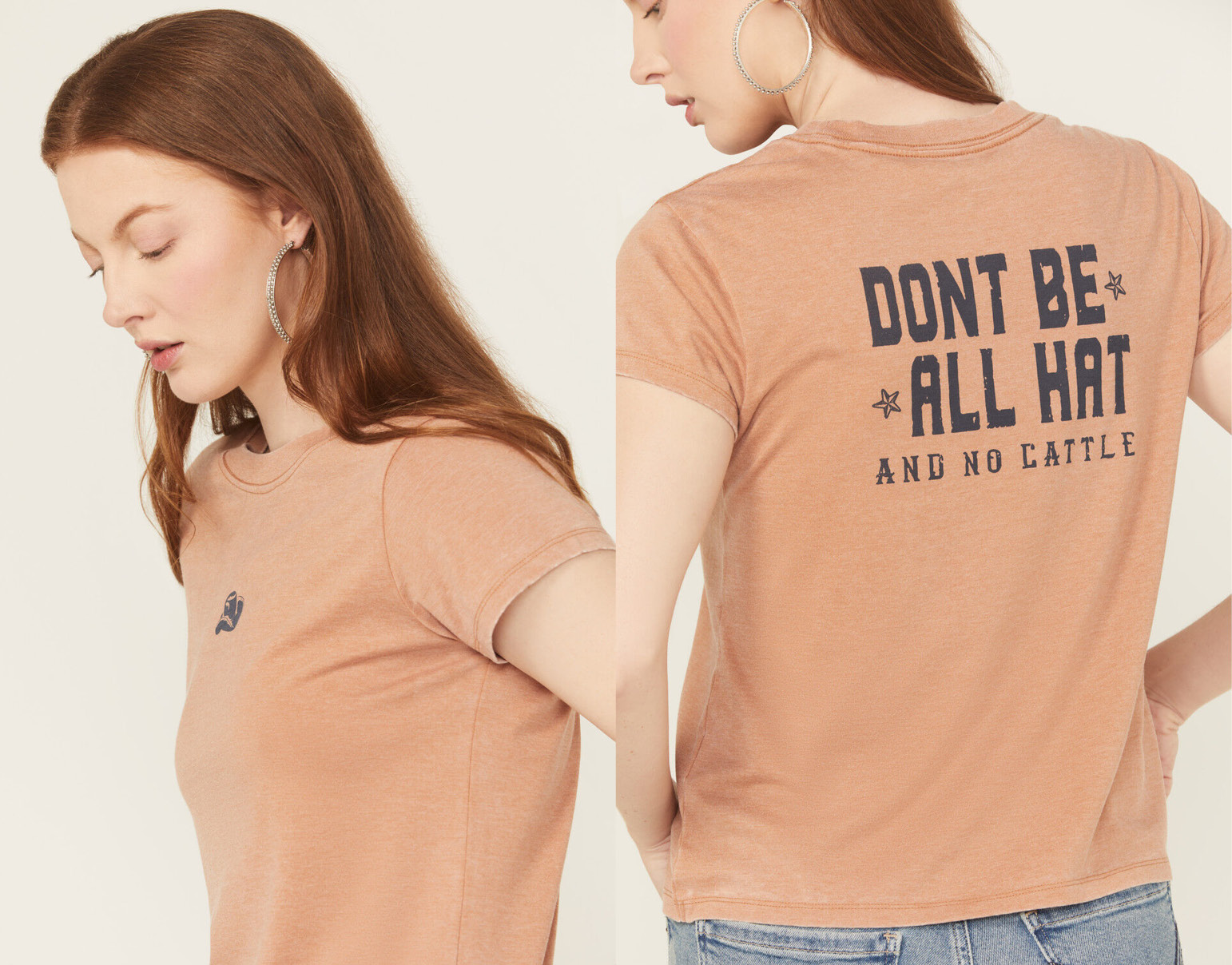

Finished and near-finished explorations across embroidery, Americana graphics, surface pattern, dimensional type, and distressed western illustration. Each piece had a different production context and a different audience.ions across two audiences: an embroidered patch, a holiday Americana concept, a floral surface pattern, dimensional type, and a high-contrast rodeo illustration. Each required a different production logic, from embroidery constraints to print.
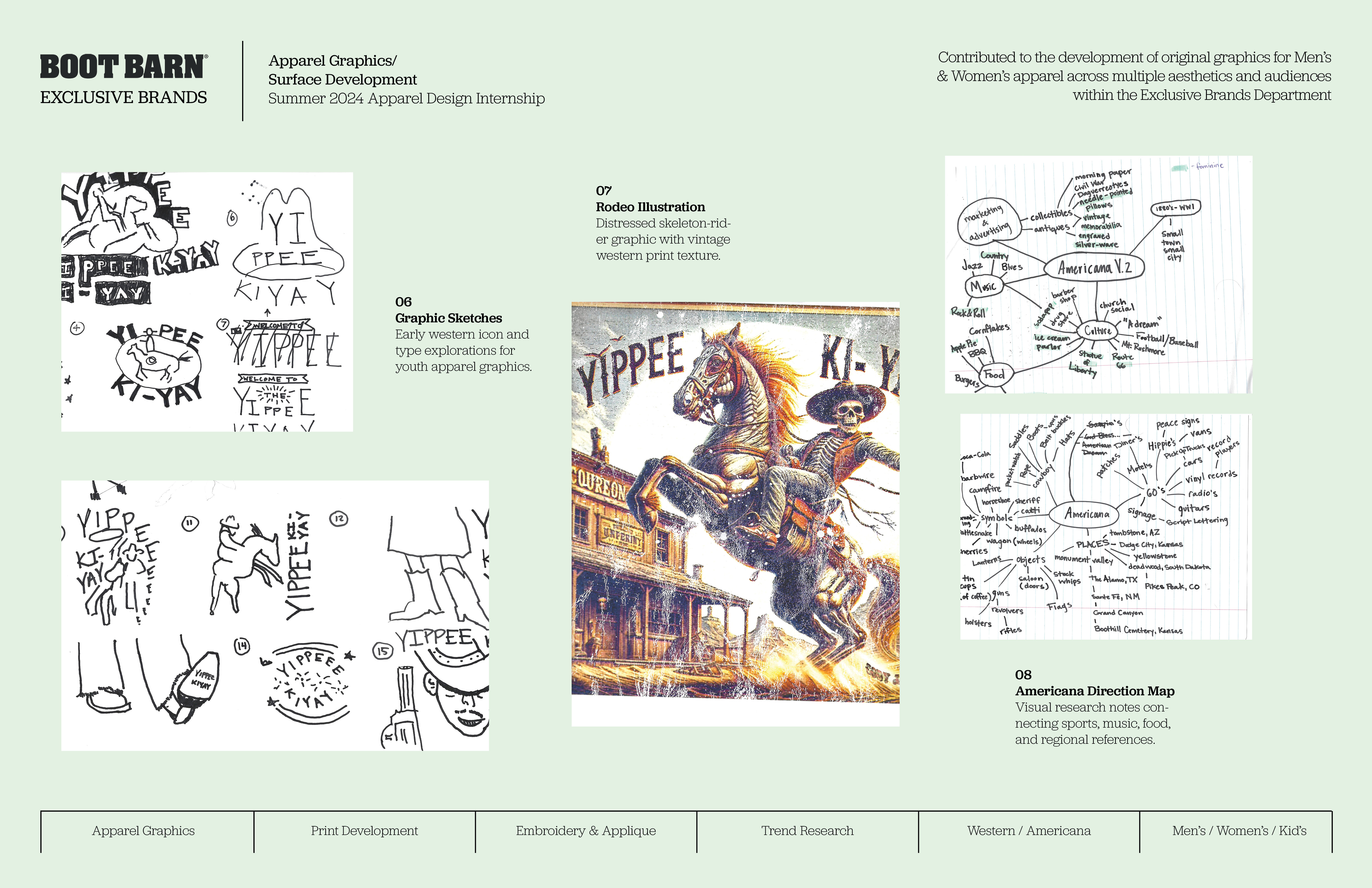
The Americana direction maps came before anything touched Illustrator. Connecting music, food, regional symbols, and vintage print language into a working mood gave the graphics somewhere to come from.
Westernwear is never only clothing. It is labor, costume, inheritance, performance, and regional memory, all sold under the same roof. A cowboy hat, a rodeo graphic, a patch, a slogan, a distressed typeface: each carries some version of American belonging, whether earned, inherited, bought, or imagined. At Boot Barn, those symbols had to become commercial apparel. During my internship with the Exclusive Brands team, I contributed to men's, women's, and youth graphics across Americana, rodeo, western, and workwear aesthetics, working from trend research through to production-ready files. The work demanded range, speed, and the discipline to understand that in apparel, a simple graphic is not always a lesser one.
Western visual language looks deceptively familiar until you have to produce it. The icons, the distress, the type, the patch construction: each has a grammar, and getting it wrong reads immediately on a garment.
Eight weeks inside Boot Barn's Exclusive Brands department: the team responsible for the retailer's in-house labels, running fast, and not especially interested in babysitting an intern.
Westernwear is never only clothing. It is labor, costume, inheritance, performance, and regional memory, all sold under the same roof. A cowboy hat, a rodeo graphic, a patch, a slogan, a distressed typeface: each carries some version of American belonging, whether earned, inherited, bought, or imagined. At Boot Barn, those symbols had to become commercial apparel. During my internship with the Exclusive Brands team, I contributed to men's, women's, and youth graphics across Americana, rodeo, western, and workwear aesthetics, working from trend research through to production-ready files. The work demanded range, speed, and the discipline to understand that in apparel, a simple graphic is not always a lesser one.
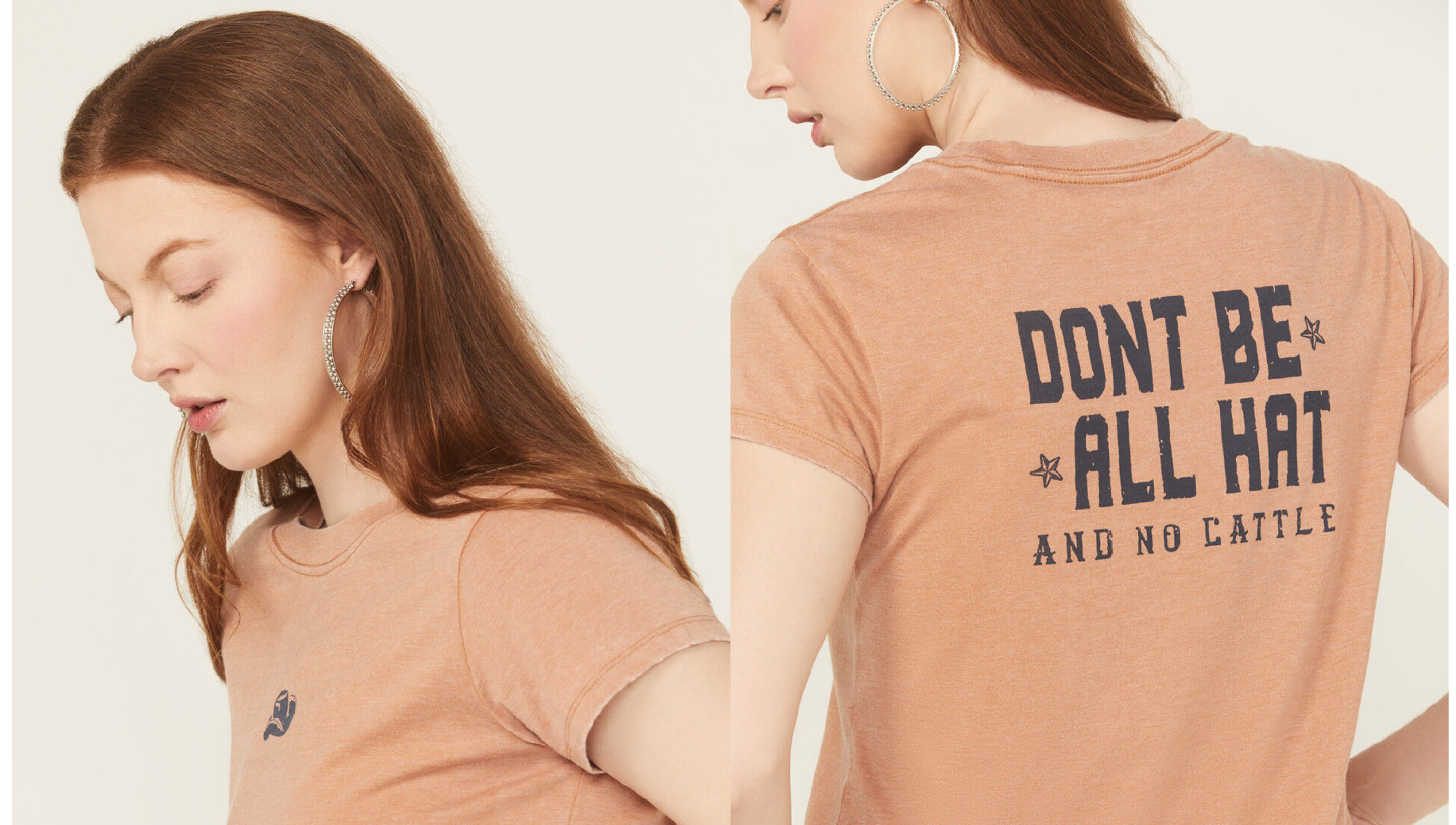

Finished and near-finished explorations across embroidery, Americana graphics, surface pattern, dimensional type, and distressed western illustration. Each piece had a different production context and a different audience.ions across two audiences: an embroidered patch, a holiday Americana concept, a floral surface pattern, dimensional type, and a high-contrast rodeo illustration. Each required a different production logic, from embroidery constraints to print.

The Americana direction maps came before anything touched Illustrator. Connecting music, food, regional symbols, and vintage print language into a working mood gave the graphics somewhere to come from.
Western visual language looks deceptively familiar until you have to produce it. The icons, the distress, the type, the patch construction: each has a grammar, and getting it wrong reads immediately on a garment.
Eight weeks inside Boot Barn's Exclusive Brands department: the team responsible for the retailer's in-house labels, running fast, and not especially interested in babysitting an intern.

